
Why Your Car Listing Photos Aren't Converting (And How to Fix It)
 AO from WheelStage·6 min read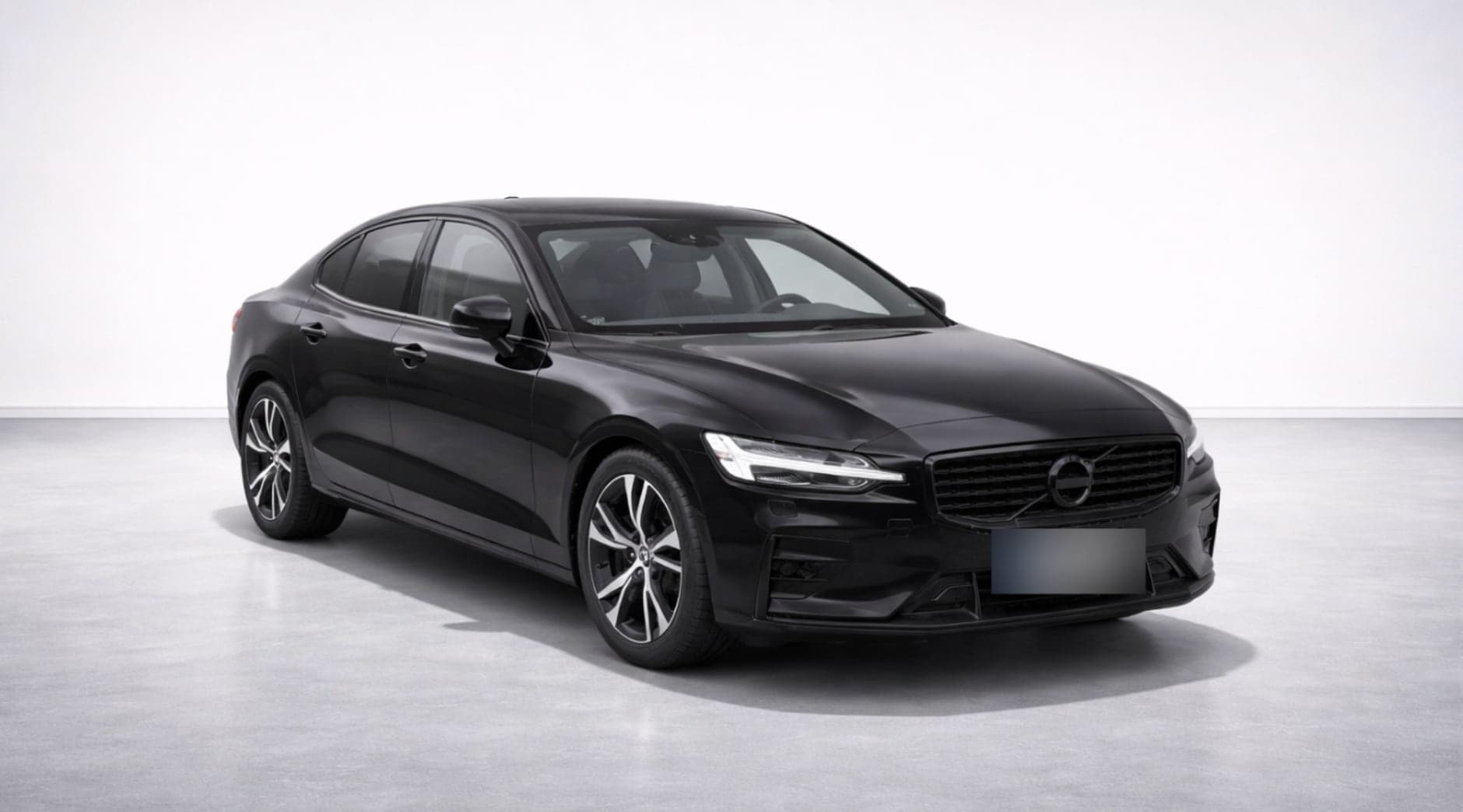
Key Points of This Article
- 92% of car buyers research online before visiting a dealership—listing photos are your first impression (demandlocal.com)
- Great photos can increase views by 47% and generate 62% more leads compared to poor-quality images (360booth.com)
- Getting studio quality photos for listings is challenging and time consuming for most dealerships
- Great listing photos share common traits: clean backgrounds, even lighting, and complete angle coverage
- Tools like WheelStage can help your dealership get studio-quality photos in minutes
Whether you're running operations at a car dealership or flipping cars on marketplaces and other online channels, you probably already know how far good images can go.
Like many things, the first impression isn't everything—but it opens the door to interest, which in turn leads to interested buyers.
In this article, I'll share how you can leverage tools to create listing-ready, studio-quality car photos without spending hours on repetitive work or thousands on expensive photographers. But first, let's quickly look at why images are perhaps the most important aspect of car listings in 2026 and beyond.
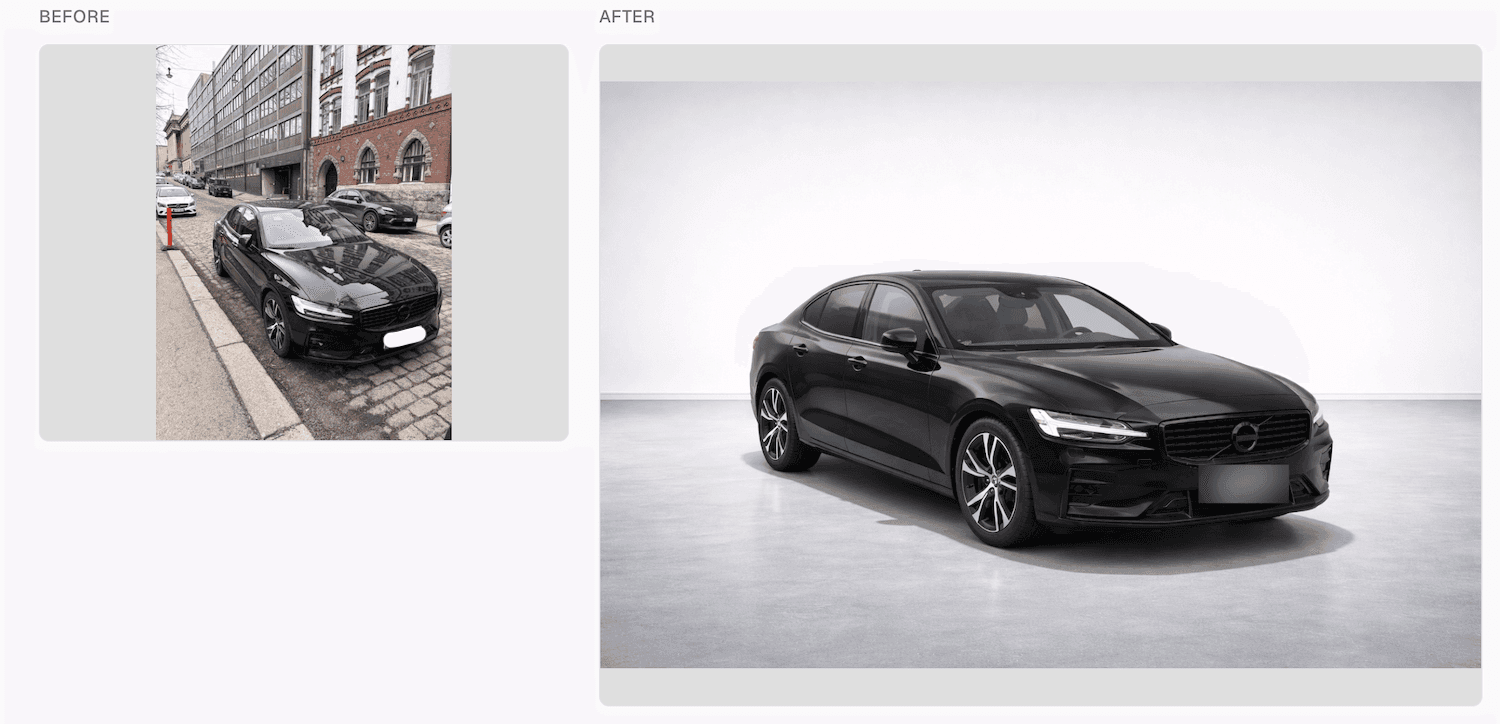
Volvo V60 listing photo enhanced with WheelStage in under 1 minute.
Why Good Images Matter
Today, 92% of buyers research their next car online before they ever visit a dealership or pick up the phone (demandlocal.com). Listing photos aren't just a supporting detail—they are the entire first impression that determines whether a potential customer clicks or keeps scrolling.
The numbers behind photo quality are hard to ignore. Research shows that great photos can increase a car listing's views by 47% and generate 62% more leads compared to poor-quality images (360booth.com). That's not a marginal improvement. Images can be the difference between a car that sits on the lot for six weeks and one that generates calls within days.
The importance of good images is further amplified by the fact that 75% of automotive shopping now happens on mobile devices (demandlocal.com). Mobile means fast-paced behavior and small screens, which increases the importance of visually striking, scroll-stopping images.
As a personal anecdote, I first discovered the importance of car listing photos back in 2015 when I was looking for a Volkswagen Golf—one of the most common cars in my country. After scrolling through endless pages of similar listings, you start to go numb. At some point, you begin clicking listings purely based on the visual first impression of the main image. At least, that was the case for me.
With all this in mind, it's clear that car listing photos really matter—especially for dealerships or sellers where turnaround speed and storage space are critical.
How Most Car Dealers Handle Photos
If you walk into most independent dealerships and ask how they handle listing photos, you'll usually get one of three answers.
"We take them ourselves."
The most common response is that someone within the dealership handles photography by following a standard operating procedure of varying quality. The photos are usually taken on a phone and usually in the same environment. The photos are usually taken in whatever the lighting or weather happens to be at that moment.
The result is often inconsistent and underwhelming. Some cars look decent, others look rough depending on lighting, background, and how much time was available. There's typically no editing and no background cleanup. This approach gets the job done but stretches sales cycles more than necessary by not leveraging better cover photos.
It gets the car online fast—but rarely makes it look anywhere near its best.
"We use a photographer."
This solves the quality problem—but creates a new one.
Professional car photography can cost around $800 for a standard 4-hour shoot in the US (simpsocial.com), and that's before post-production. What many dealers don't realize is that the shoot itself is only part of the cost. Additional time and money often go into background removal—with many operations spending an additional $5–15 per vehicle on replacing messy lot environments with clean, studio-style backdrops (dealerrefresh.com).
That "affordable" photographer often isn't so affordable once the editing bill arrives.
Then there's the time issue: scheduling, coordinating, and waiting for edited files. A car that arrives on Monday might not have listing photos ready until the following week—and every day it sits unlisted is a day it isn't selling.
"We use an enterprise platform."
This is more common with larger dealerships.
While these platforms can help with workflows like editing and lead management, they don't remove the need for photography itself—which is still usually handled by staff or external photographers.
They also tend to be complex, expensive, and require dedicated personnel to operate. For smaller or independent dealerships, this often creates more overhead than value.
Most small to mid-sized dealerships don't need complexity.
They need a simple, efficient way to produce studio-quality photos:
- Not rushed phone photos
- Not expensive photoshoots
- Not enterprise-level software
That's exactly why we created WheelStage (you can try it for free).
Next, let's look at what actually makes a great listing photo—and how you can achieve it in minutes.
What Great Listing Photos Have in Common
Before solving the problem, it's important to understand what you're aiming for.
The best-performing car listings aren't necessarily the most artistic—they're clean, consistent, and designed to grab attention instantly. 67% of consumers consider the quality of product images vital in their decision-making process, rating it higher than product information, detailed descriptions, and customer reviews (claid.ai).
Here's what they all have in common:
1. A Neutral Background
No bins. No other cars. No brick walls. No grey skies. A clean white, grey, or studio-style background keeps the focus entirely on the vehicle.
2. Even, Diffused Lighting
No harsh shadows. No blown-out reflections. Overcast natural light or soft studio lighting both work—the key is consistency across every photo.
3. A Complete Set of Angles
Buyers want to inspect the car before they ever reach out. Include:
- Front three-quarter
- Rear three-quarter
- Side profile
- Front and rear
- Interior (front and rear)
- Dashboard
- Shots of any damages or wear and tear for transparency
4. No Distractions
- No strong reflections in the windows or the car's surface
- No dirt, rain or snow on the car
- No colleagues in the background
- No forgotten coffee cups on the roof (yes this happens from time to time)
None of this requires a professional photographer or a physical studio. What it requires is the right tool—and about five minutes.
How WheelStage Changes Car Photo Editing
This is where it gets practical.
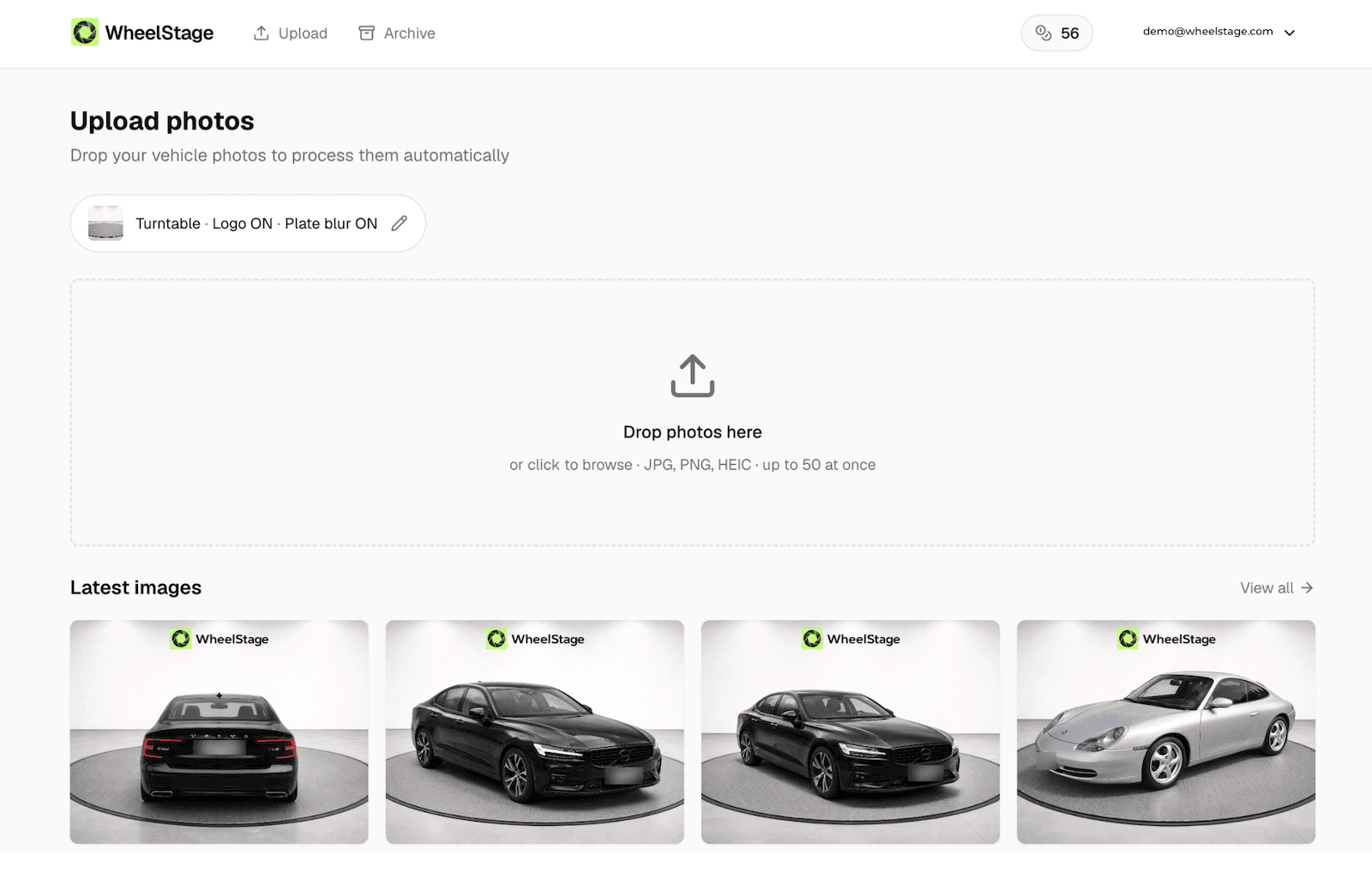
The reason that many independent dealers are stuck with bad photos isn't laziness or indifference. It's the absence of a realistic option between "phone photo with no editing" and expensive photography or hours wasted on inhouse photoshoots and editing. With WheelStage we wanted to change that situation by leveraging AI and automation for studio quality car photo editing that is actually both fast and easy.
The way it works is straightforward. You take your photos as you normally would — with a phone, walking around the car on your lot or on the street, wherever it's convenient for you. Then you upload them to WheelStage. Within minutes, the messy background is replaced with a clean, professional studio environment, the plate is automatically blurred (if you want blurred plates), lighting is balanced, and the result looks like the car was shot in a controlled studio. No photographer or editing software required.
The economics make sense for any size of operation. Dealerships that embraced automated background editing have seen up to 30% increases in sales conversions (carstudio.ai). If you're listing 10 cars a month, the difference between amateur phone photos and clean AI-processed images is roughly the difference between 47% fewer views and 62% fewer leads — every single month, on every single car. Better photos can not only lead to shorter sales cycles and higher inventory turnaround but can also increase profits through the increased interest that professional photos attract.
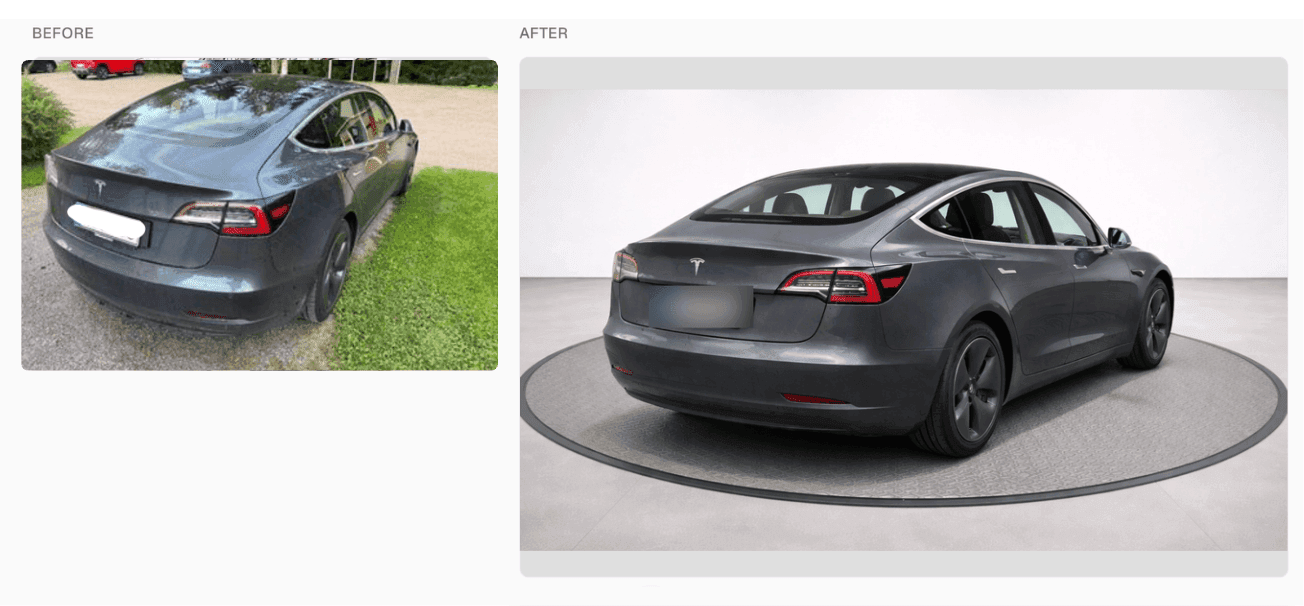
Tesla Model 3 listing photo enhanced with WheelStage in under 1 minute.
Try It Yourself
WheelStage was created to help car dealerships of all sizes, from independent dealers to larger dealerships with multiple locations and a higher turnaround of cars.
Now, instead of describing in text how WheelStage can help your dealership to increase sales and profits through easy car photo editing we decided to give new users five free credits, no credit card required. This way you can try the product yourself before deciding to buy anything.
All you need to do is sign up and upload your first photos and you will have your first, studio quality car photos ready within minutes. We hope you find it valuable. If there are any questions regarding the tool feel free to reach out to us from the contact page once signed in and we'll get back to you asap.
Happy car photo editing!

Written by
AO from WheelStage
Car owner and enthusiast, founder of WheelStage.